I have three big passions in this life: reading, writing, and traveling. I suppose because they are really one and the same in the very end, albeit in different stages, in my mind, they share the same communal space. Traveling is the backbone of all stories. When we travel, we take in the story that will later be written in our diaries and perhaps even published along the way. Traveling is to writing like writing is to reading, and that translates into pure wonder.
There are books that ground you, and there are books that simply invite you to spring into motion like the waves of a deep blue sea. Some books feel like they were written not just to be read, but to be carried. They belong in the side pocket of a backpack, dog-eared and sun-warmed, or tucked into the folds of a train ticket. They are companions, not just texts—mirrors to the landscapes we pass through and the inner terrain we navigate.
Over the years, I have developed the strange tradition of purchasing a volume in every city I am in. I have learned more about Italian history in a handful of pages during a three-hour train ride from Florence to Rome than I have in 22 years of schooling. The places we visit and the books we read will, in the end, forever mark us. They become intertwined in the mind, and it becomes impossible to tear them apart.
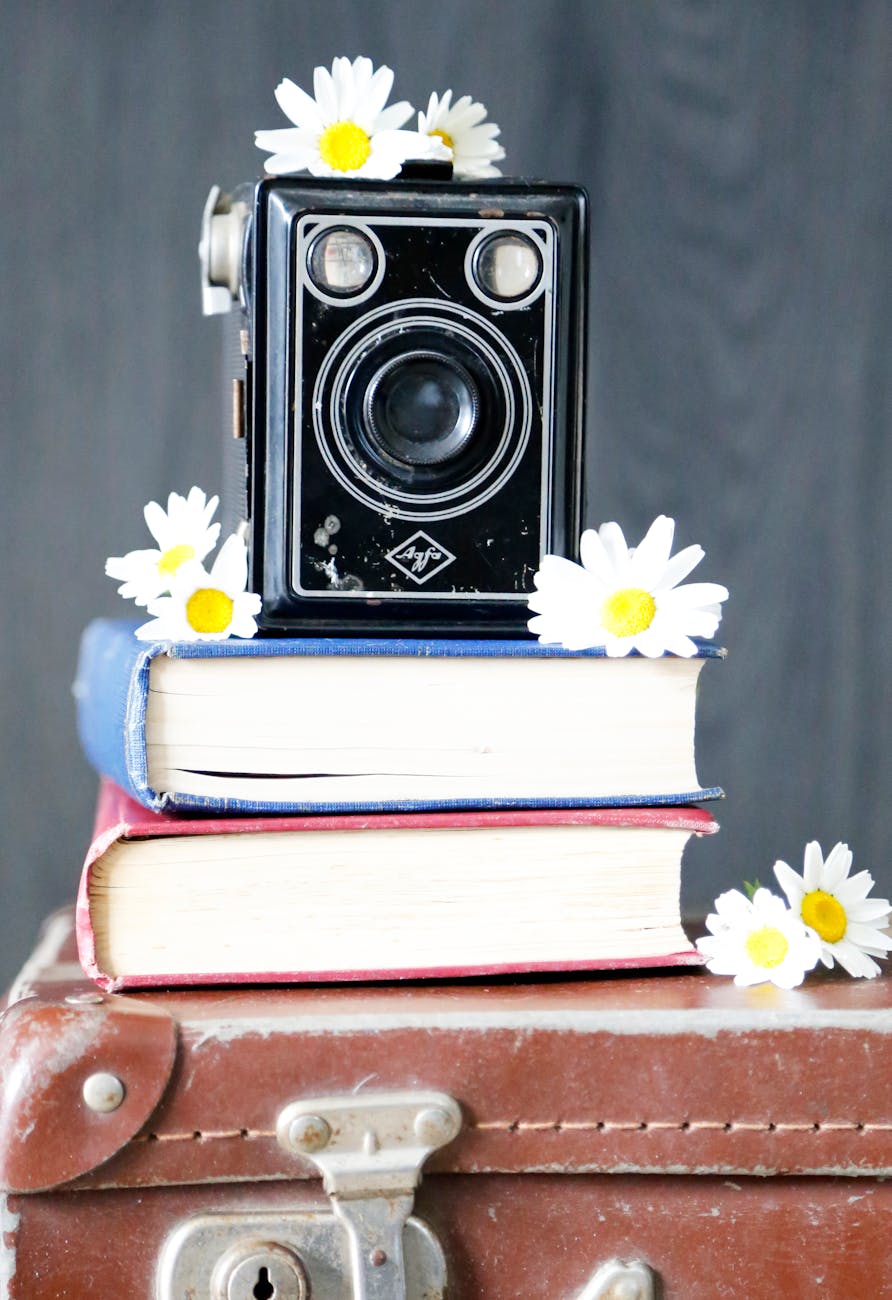
There’s something sacred about the moment a book finds you in a new place. Not just the act of purchase, but the quiet ritual that follows: peeling back the cover in a foreign café, tracing the first sentence as if it were a map. The story begins to absorb the sounds around you—the clink of porcelain, the hum of a different language, the rhythm of unfamiliar footsteps. And later, when you return home, that book will carry the scent of that city in its pages.
Sometimes, the book comes first. You read Travels with Charley and suddenly feel the itch to drive west, to talk to strangers in roadside diners, to let the road decide. Or you read Wild and find yourself lacing up boots you hadn’t touched in years. The story plants a seed, and the journey becomes its bloom. Other times, the place chooses the book. A quiet bookstore in Florence offers a slim volume on Italian literature, and you read it on the train to Rome, watching olive groves blur past. The words and the landscape begin to braid together. You start to see the hills as stanzas, the ruins as punctuation. The book becomes a lens, and everything sharpens. But sometimes, and perhaps in my book the most magical of them all, the book comes to you by word of mouth. A local suggests it, and then it suddenly appears in a bookshop in the middle of a remote Portuguese town where the sun kisses Roman ruins and the Mediterranean heat rises from the cobblestones. Then, it really does feel like destiny and you cannot help but to bring it along. You tuck it into your bag, this book that found you. It’s not just a souvenir—it’s a thread in the tapestry of the journey. Later, when you open it again, the pages will release the scent of sun-warmed stone and eucalyptus, the echo of a stranger’s recommendation, the feeling of being exactly where you were meant to be.
This is why I travel with books—not just for company, but for communion. They help me listen more deeply, observe more gently, and remember more fully. They mark the journey in ways no photograph ever could. A bent spine, a scribbled margin, a ticket stub tucked between pages—these are the souvenirs I treasure most. And when I write, I return to those books. I quote them, echo them, argue with them. They become part of my own narrative, stitched into the fabric of my voice. The story I write is never mine alone—it’s a chorus of all the stories that walked beside me.
I remember the first time that a book truly found me. Not in a bookstore, not on a recommendation list, but in the quiet hush of a foreign café, where the air smelled of citrus and sea salt, and the espresso came with a curl of orange peel. I had no intention of buying anything that day, but the book was there—leaning slightly on a crooked shelf, its spine sun-faded, its title unfamiliar. I opened it, and the first sentence felt like a door swinging wide. That moment stayed with me. It taught me that books, like places, sometimes choose us. They arrive unannounced, carrying the mood of the city, the rhythm of the street, the voice of the stranger who pointed you toward them. And when you carry them home, they don’t just sit on your shelf—they hum with the incantation of memory.
I remember reading a travel memoir that traced a solitary walk across Europe, its prose as elegant and deliberate as the footsteps it described. I read it in a quiet guesthouse, the windows open to a river that had seen centuries pass. The book didn’t just describe a journey—it taught me how to move through the world with reverence, how to notice the curve of a bridge or the way a cathedral casts its shadow at noon. Another time, a book about the far south—windswept, mythic—found its way into my hands in a market where the language was not my own. Its fragmented storytelling mirrored the landscape it described: spare, enigmatic, full of longing. I hadn’t planned to travel in that direction, but the book nudged me toward it, and when I finally arrived, it felt like stepping into a sentence I’d already read.
These books are more than companions. They are co-authors of the journey. They lend their cadence to your footsteps, their metaphors to your memories. They remind you that every place has a story and every story has a place. So I keep collecting them—one city, one book, one chapter at a time. I let the shelves guide me, the locals suggest, the serendipity unfold. And when I return home, I stack them like milestones, not just of where I’ve been, but of who I was when I passed through.
So here I share a list of books to accompany you on the road wherever the wind might drag you. These aren’t guides. They aren’t assignments. They are companions. These are stories that walk beside you, shift your perspective, steady your breath, and leave you a little more awake to the world, because the miles matter, but the company matters more.
AFRICA – DARK STAR SAFARI by Paul Theroux
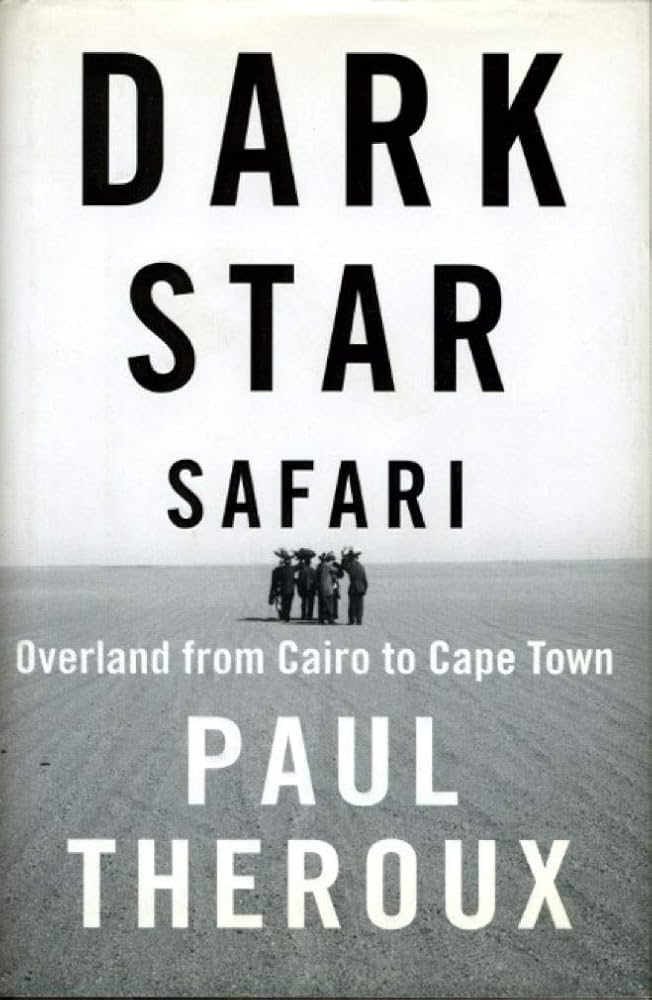
Theroux’s overland journey from Cairo to Cape Town is both physical and philosophical. He travels by bus, train, and bush taxi, reflecting on the complexities of aid, colonial legacy, and the raw beauty of the continent. It’s a book that challenges and illuminates, offering Africa not as a monolith but as a mosaic of voices and landscapes. Dark Star Safari is not a romanticized postcard of Africa—it’s a layered, often uncomfortable meditation on the continent’s past and present. Along the way, Theroux revisits places he once knew as a young Peace Corps volunteer, confronting the dissonance between memory and reality, between idealism and experience. He writes with sharp observation and unflinching honesty, questioning the long-term effects of foreign aid, the legacy of colonialism, and the resilience of local communities. His encounters with schoolteachers, missionaries, aid workers, and fellow travelers reveal a continent that is vibrant, contradictory, and constantly in motion. The landscapes shift from desert to jungle to savannah, but what lingers most are the conversations: candid, complex, and often humbling.
SOUTH AMERICA – IN PATAGONIA by Bruce Chatwin
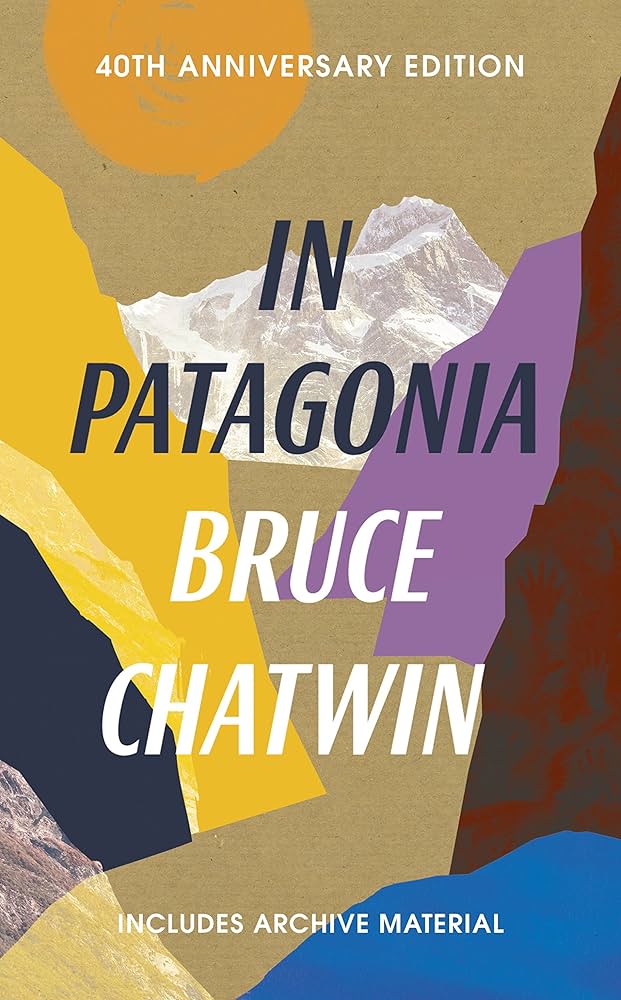
In Patagonia is Bruce Chatwin’s elliptical, poetic drift through the mythic southern reaches of Argentina. Instead of offering a linear narrative, the book unfolds in bright, wind‑scoured fragments—encounters with gauchos, exiles, fossils, and half‑remembered legends—each one adding texture to a landscape that feels both ancient and unknowable. Chatwin’s prose is spare yet strangely lush, driven by a curiosity that borders on obsession. He doesn’t try to explain Patagonia so much as evoke its mystery, making you feel the wind, the silence, and the pull of the faraway. It’s a book that invites you to wander rather than arrive.
What struck me most was the way Chatwin treats Patagonia as both a place and a rumor. Every encounter feels like a clue to a larger, half‑buried story, yet he never pretends the pieces will fit neatly together. That refusal to resolve anything is part of the book’s power. Patagonia becomes a landscape of longing—wind‑carved, empty, full of ghosts—and Chatwin moves through it like someone chasing an echo. Reading it feels less like following a journey and more like being pulled into a geography of myth.
NORTH AMERICA – A WALK IN THE WOODS by Bill Bryson
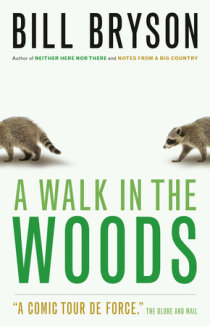
Bill Bryson’s A Walk in the Woods is a travelogue disguised as a comedy of errors, a book that turns the Appalachian Trail into both a physical challenge and a running joke about human stubbornness. Bryson approaches the wilderness not as a rugged adventurer but as a man who simply decided one day that walking 2,000 miles sounded like a reasonable idea. The result is a narrative full of mishaps, black bears, questionable gear choices, and the kind of companions you only acquire when you’re too tired to argue.
What makes the book work isn’t the mileage he covers but the voice he brings to it — warm, curious, and relentlessly amused by the absurdity of both nature and human behavior. Bryson has a gift for turning trail statistics into punchlines and historical tangents into miniature stories, all without losing sight of the landscape itself. The Appalachian Trail becomes a character: vast, indifferent, beautiful in a way that sneaks up on you.
If Chatwin wanders Patagonia in search of myth, Bryson trudges through the American wilderness in search of meaning, humor, and maybe a little humility. A Walk in the Woods is less about conquering a trail and more about confronting one’s own limits — and finding, somewhere between the blisters and the blackflies, a renewed sense of wonder.
ASIA – FROM HEAVEN LAKE by Vikram Seth
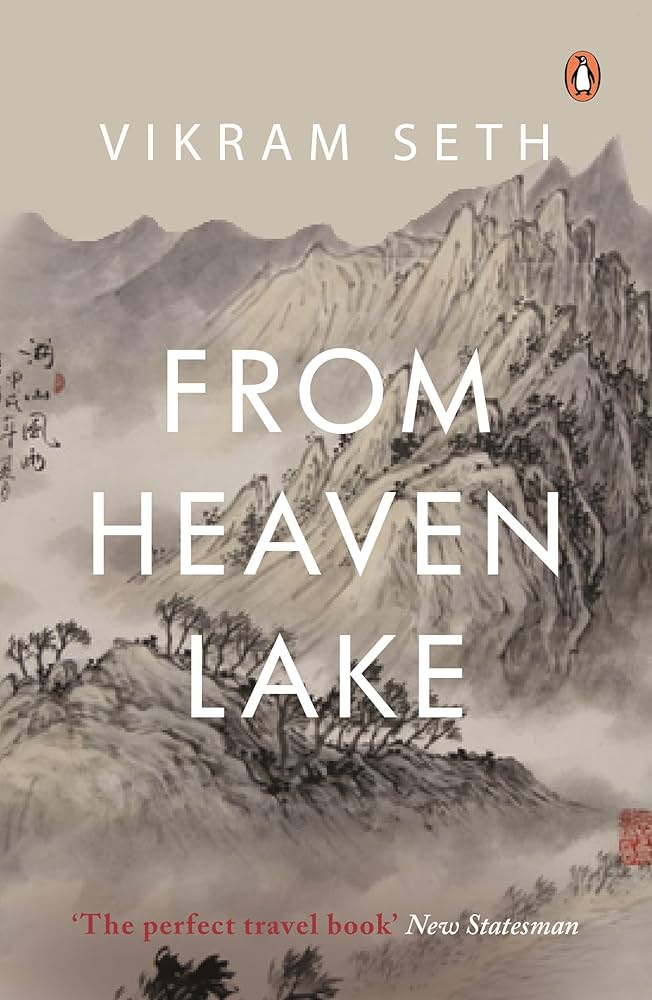
From Heaven Lake is Vikram Seth’s quiet, clear‑eyed journey across western China into Tibet and down toward India — a route stitched together not by grand adventure but by the small, human negotiations of hitchhiking, border crossings, and the kindness of strangers. Where some travel writers chase myth or chaos, Seth moves with a gentler curiosity, letting the landscape reveal itself in its own time.
The book is slim, almost understated, but that restraint is part of its power. Seth notices everything: the cadence of a conversation, the geometry of a mountain pass, the way political tension hums beneath the surface of daily life. His prose is clean and unhurried, and the result is a travel narrative that feels less like a performance and more like a companionable walk beside someone who sees the world with unusual clarity.
What lingers isn’t spectacle but intimacy — the quiet moments on long roads, the shared meals, the glimpses of ordinary life in places most travelers only pass through. Seth’s Asia is not exoticized or dramatized; it’s lived‑in, complicated, and deeply human. If Chatwin’s Patagonia is a mosaic of myth, Seth’s Tibet is a study in stillness, a landscape that asks you to listen rather than interpret.
From Heaven Lake is a reminder that not all journeys are loud. Some unfold in low tones, in the space between languages, in the slow accumulation of miles. It’s a book that doesn’t demand awe so much as attention — and in that attention, it finds its own quiet form of wonder.
OCEANIA/AUSTRALIA– IN THE LAND OF OZ by Howard Jacobson
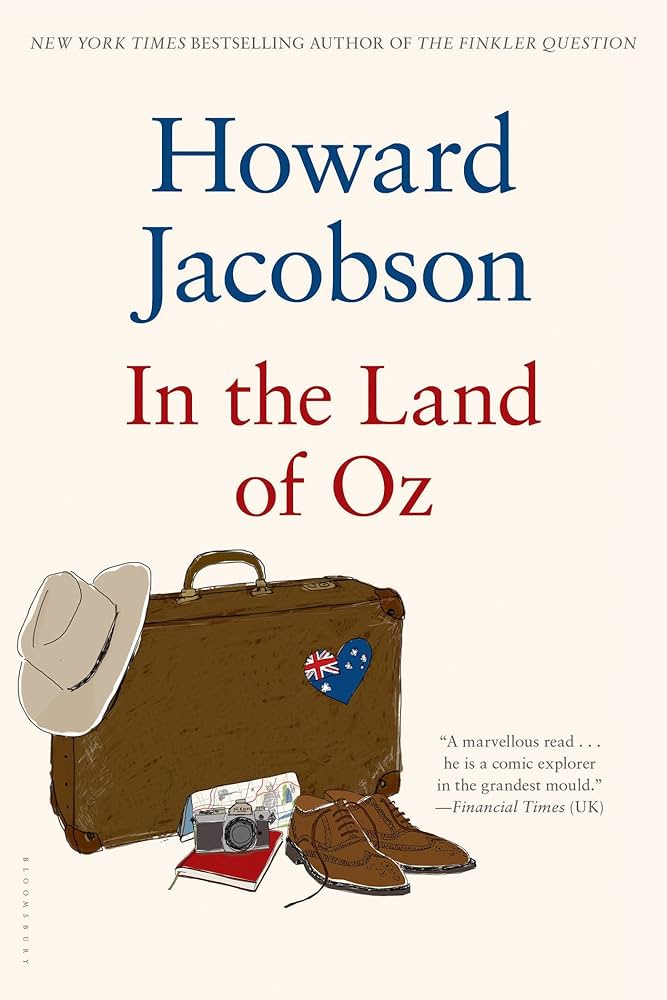
In the Land of Oz reads like a road trip taken on a dare — the kind you say yes to before you’ve had time to think, and then spend the next thousand miles trying to understand why. Jacobson doesn’t travel through Australia so much as ricochet across it, bouncing from outback towns to coastal cities with the jittery energy of someone who knows the map is lying to him. The country keeps shifting under his feet: too big, too bright, too blunt to be held still.
What he finds isn’t serenity or revelation but a parade of characters who feel carved out of heat and dust — people who talk too much, drink too much, argue too much, and somehow reveal more about Australia than any panoramic description ever could. Jacobson meets them all with a mix of irritation and fascination, like a man who can’t decide whether he’s fallen in love with a place or been personally insulted by it.
There’s a scrappiness to the book that I love: the sense that the journey is always one bad decision away from unraveling, and that this is exactly where its charm lives. Australia, in Jacobson’s telling, is not a landscape you contemplate — it’s a force you collide with. The humor is sharp, the observations messy and human, and the whole thing hums with the chaotic electricity of a road trip that refuses to behave.
If Patagonia is myth and Tibet is stillness, Australia is noise — sun‑struck, argumentative, and alive. Jacobson captures that unruliness with a kind of reluctant affection, and by the end, you feel it too: the strange pull of a place that doesn’t want to be understood, only survived.
EUROPE– A YEAR IN PROVENCE by Peter Mayle
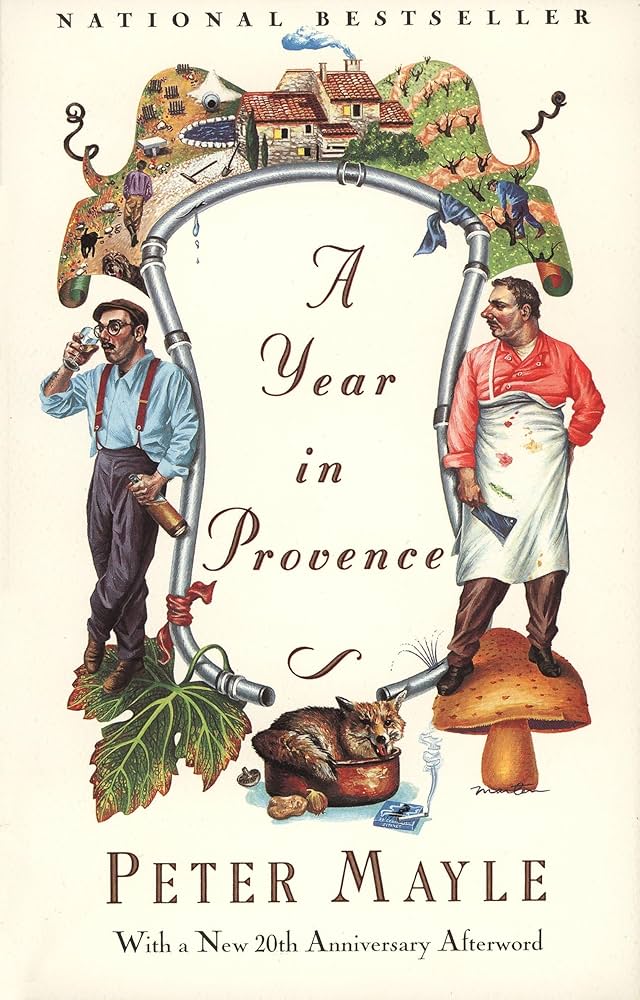
A Year in Provence is Peter Mayle’s love letter to a place where time moves differently — not slower, exactly, but with a kind of deliberate pleasure that makes you question the pace of your own life. The book opens with Mayle settling into an old farmhouse in the Luberon, and from there the year unspools in seasons: mistral winds, long lunches, neighbors who appear unannounced with wine or unsolicited advice, and the steady, irresistible pull of a landscape that insists on being savored.
Mayle writes with a warmth that feels almost edible — you can taste the olive oil, hear the clatter of pétanque, feel the sun pooling in the courtyard. There’s humor, too, but it’s gentle, affectionate, the kind that comes from watching yourself slowly become part of a place you thought you were only passing through. Provence, in his telling, isn’t a backdrop; it’s a character with moods, rituals, and a stubborn charm that wears you down in the best possible way.
What I love is how unhurried the book feels. There’s no grand revelation, no dramatic arc — just the quiet transformation that happens when you let a landscape rearrange your priorities. Mayle captures the pleasure of small things: a perfect meal, a well‑timed glass of wine, the first warm day after winter. It’s travel writing that doesn’t chase movement; it celebrates rootedness, the way a place can claim you simply by being itself.
If Patagonia is wind and myth, and Australia is noise and collision, Provence is sunlight — steady, generous, and impossible to resist. Mayle lets you linger there, and by the end, you understand why he stayed.
ANTARTICA– THE MADHOUSE AT THE END OF THE EARTH by Julian Sancton
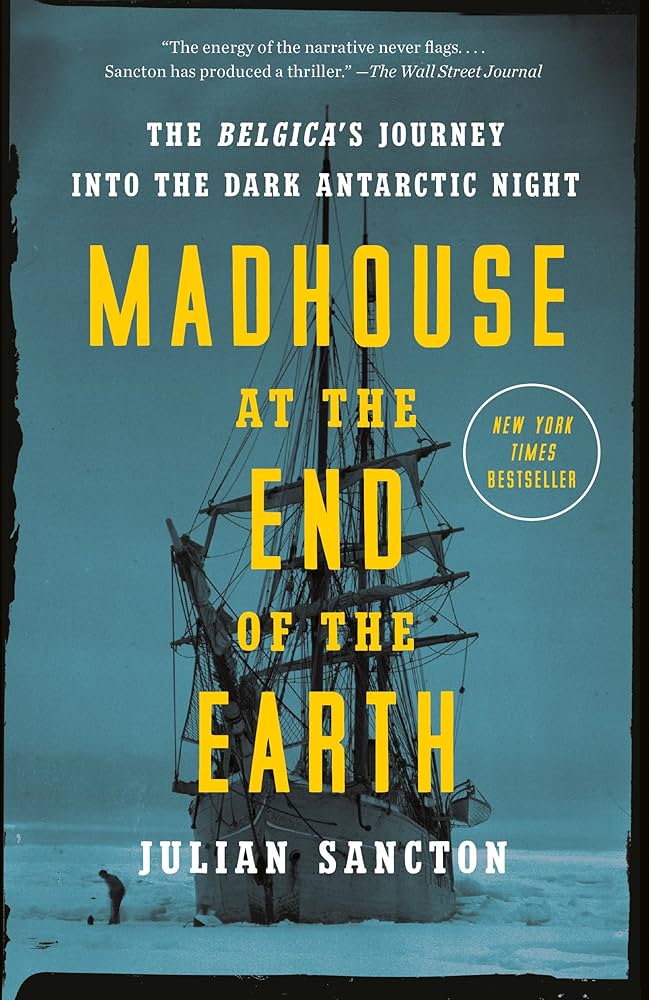
Some stories don’t unfold; they tighten. Julian Sancton’s The Madhouse at the End of the Earth is one of them — a historical account that reads with the velocity of a thriller, pulling you into the doomed Belgica expedition until you can almost feel the walls of the ship closing in. Antarctica here isn’t a blank, contemplative landscape; it’s a trap, a white labyrinth that swallows light, time, and sanity.
Sancton reconstructs the journey with a novelist’s instinct for tension. The crew’s optimism curdles into dread as the ship freezes into the ice, and what begins as exploration becomes endurance, then confinement, then something darker. The cold isn’t just temperature — it’s a psychological pressure, a force that strips each man down to whatever truth he’s been avoiding. The result is a narrative that feels both epic and intimate, full of small human fractures against a backdrop of impossible scale.
What makes the book so gripping is its attention to the interior lives of the crew. Sancton doesn’t romanticize them; he lets their contradictions stand. Bravery sits beside pettiness, ingenuity beside despair. In that sense, the Belgica becomes a floating microcosm of human nature, drifting in a place that refuses to care whether they survive. Antarctica is not the antagonist — it’s the indifferent stage on which everything unraveling inside them becomes visible.
If Patagonia is myth and Provence is sunlight, the Belgica is shadow — a reminder that exploration has always been as much about the limits of the mind as the edges of the map. Sancton captures that descent with precision and empathy, making this one of the rare polar narratives that feels not just historical, but hauntingly present.
In the end, reading across continents feels a lot like traveling across them. Each book shifts the light a little, changes the temperature, rearranges the air in your lungs. Patagonia teaches you to follow the fragments. Tibet teaches you to listen. Australia reminds you that chaos is also a kind of map. Provence slows your pulse. Africa stretches the horizon. North America laughs at you and with you. Antarctica strips everything down to the bone.
What I have learned, moving through these stories, is that books behave like landscapes. Some open wide. Some narrow to a single path. Some ask you to hurry; others insist you linger. None of them agree with each other, and that’s the point. Together they form a kind of global library — seven ways of seeing, seven ways of moving, seven ways of being changed by a place you may never physically stand in.
Because reading is its own form of travel. You cross borders without packing a bag. You meet strangers you’ll never forget. You feel the weather of a place you’ve only imagined. And when you finally do step into the world — when you’re on the road, or in a national park, or staring at a coastline you’ve only ever known through someone else’s sentences — the books come with you. They shape the way you look, the way you listen, the way you understand what a landscape is trying to say. In the end, to travel is to read the world, to write is to remember it, and to read is to prepare for the next departure.
 Booked, For Life
Leave a comment