Picture this.
The lake is quiet, dancing only with the waves created by the cool breeze of Floridian March. The trees sway gently, their lower branches nearly touching the water in a soft, ghostly caress. The tall tops of the trees — palmetto, cypress, one or two ivies —stifling and claustrophobic, create shelter for the poor man. Air plants choke the top branches, an impossible knot of life striving to survive. Here, the labyrinthine nature opens to incredible life swimming in the lake, oblivious to the human and the latent factor pulsing around it. There’s a small plywood bridge amidst the patchwork of trees. The swamp peeks right at you, wild and free and completely unashamed. The small gazebo at the end is isolated and heavenly. Lily pads sit in the shallow water beneath it, barely an inch deep, tightly packed into a bed of emerald. There are some empty water bottles, some asshole probably left them behind, and lying flaccidly on the bank atop a thick lily root, there’s this tiny little thing of a shoe. It is black and neon green with a thick, white, rubber sole.
This isn’t a scene in a novel. At least, not yet.
These are my own observations, roughly sketched in my notebook in onyx ink, from a nature walk from a few months back. Here I was, in this beautiful place, and yet my eyes were stuck in the notebook, and my pen was in constant motion, because if there is something that I have learned over the years as a writer, it is to pay attention.
Some people take a camera with them when they travel. I take a notebook and a pen. Everything I see, every conversation I sustain, and every person I meet along the way becomes ink for the ink god, material for the story.
There is something so special about a story born in motion. There is something so truthful and beautiful embedded in it, in the rush of the road, in the murmur of the wind, in the sound of rushing water at the end of the cataract. Suddenly, the people feel more real, as if made of blood and bone instead of paper and ink; the words hit differently, scratch and crawl out of you as if there is no other way out, no other way for them to populate the world.
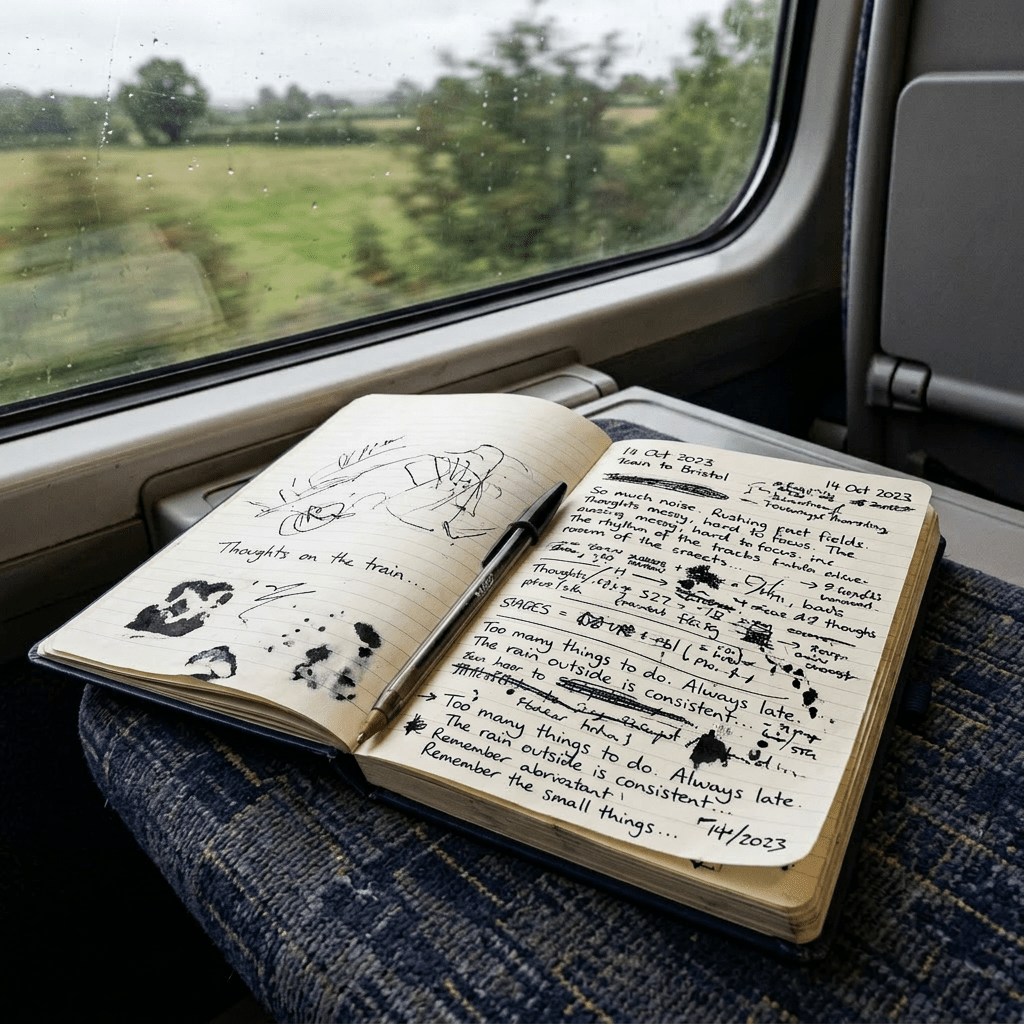
I didn’t always know how to listen. The first time I left home, I met a version of myself I didn’t know I was missing, and I only understood it later, when the road whispered it to me as I was cramped inside an old, uncomfortable tour bus on the way from Madrid to Cordoba. The sun was hitting my face, and my eyes were rewarded with beautiful landscapes unlike anything I’d ever thought I’d get to see. My eyes welled up in tears. And then I actually got to the destination, and it was perhaps one of the most beautiful places I have ever seen. I needed to sit down, I needed a moment away from history, past and present. I didn’t have a notebook with me then. I wasn’t accustomed to bringing one along, not like now, where I always have one in my pocket, so I took out my phone, and I jotted down in a quick succession of strokes the magic I was seeing and the way in which it had schooled me. That was the moment that prompted me to carry a notebook around. It taught me to look around and describe what is around me in a few lines so I can later use it in my writing. I’ve written in planes, in trains, in cars. I’ve written walking, barely making eye contact in a crowded hallway, risking walking into a pillar…and through it all, I have never failed to read the room and take notes upon it. The world has stuff to teach you; you just have to stop and look.
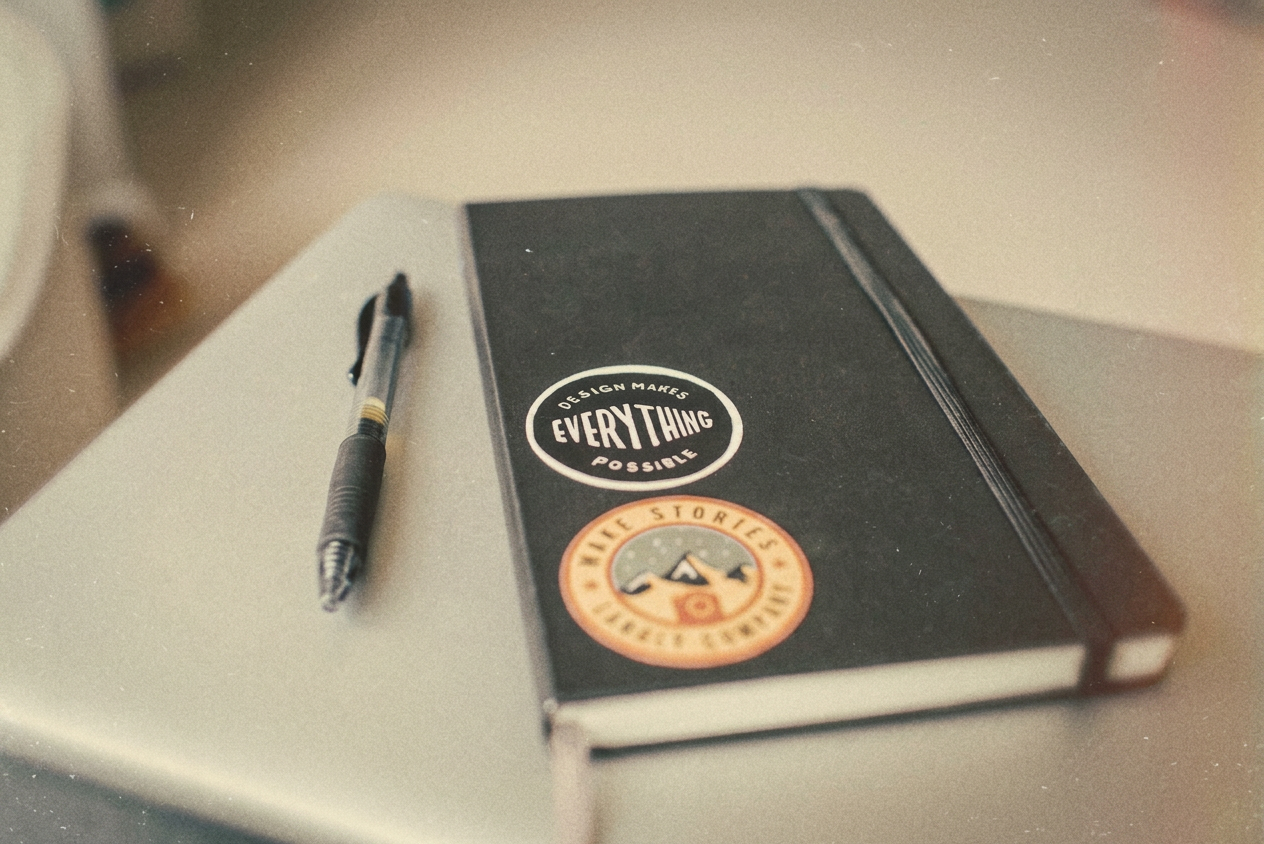
Flash forward four years (and a stationery addiction) later, and I can’t leave my house without the weight of a pen and a notebook in my pocket. I think on paper. I process on paper. I observe the world on paper. I breathe and revel on paper. Every single great idea I’ve ever had has been lodged at first within the pages of any of my many notebooks. Hell, this very post came from a couple of one-liners in my pocketbook. Inspiration is everywhere. I don’t know when and if it will hit me, but it gives me peace of mind to know that I’ll be ready if and when it does.
In the literary community, there’s this popular story that swims about in the minds of the collective. It tells the story of a man who lost nearly all his early manuscripts in 1922, when his first wife left the suitcase containing them on a train station in Paris. The suitcase was never recovered, and the man was so devastated that he stopped writing for a time. The incident forced him to start over and resulted in perhaps one of the most prolific bodies of writing in the history of American literature. For those of you who are literary-inclined, you probably already know who I am talking about. But for those of you who don’t, the man I’m talking about was Ernest Hemingway, and that terrifying, devastating loss resulted in what many critics consider his best work. That novel was The Sun Also Rises.
Why am I telling you this? You might be asking. Because writers learn the hard way that the world doesn’t wait for us to remember it. If we don’t catch a moment on the page while it’s alive, it disappears — sometimes forever. Writing that is born in motion is a fragile little thing. It lives in scraps, in margins, in the quick notes we take before the moment dissolves. And when those scraps vanish, the loss is devastating.
Maybe that’s why I carry a notebook now; not out of habit, but out of reverence. It’s a small insurance policy against forgetting, a way to trap the living moment before it dissolves. The moment you think you’ll remember something is the exact moment it starts slipping away. The world is generous, but it isn’t patient. It’s always moving, always shifting, always offering something it won’t repeat, and I don’t ever want to lose the thing that might become my best work simply because I wasn’t paying attention.
“Keep a notebook. Travel with it, eat with it, sleep with it. Slap into it every stray thought that flutters up into your brain. Cheap paper is less perishable than gray matter, and lead pencil markings endure longer than memory.”
—Jack London, Getting Into Print (1903)


Leave a comment